
TIWN
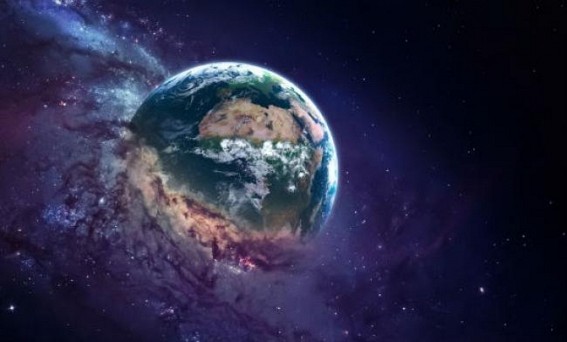
New York, March 3 (TIWN) Early Earth, home to some of our planet's first lifeforms, may have been a real-life "waterworld" without a continent in sight- a discovery that can scientists to better understand how and where single-cell organisms first emerged on Earth.
The researchers took advantage of a quirk of hydrothermal chemistry to suggest that the surface of Earth was likely covered by a global ocean 3.2 billion years ago. It may even have looked a bit like the post-apocalyptic, and land-free, future imagined in Kevin Costner's infamous film 'Waterworld'. "The history of life on Earth tracks available niches. If you've got a waterworld, a world covered by ocean, then dry niches are just not going to be available," said Boswell Wing, an associate professor in the Department of Geological Sciences at the University of Colorado Boulder. Lead author Benjamin Johnson and Wing analysed a geologic site called the Panorama district located deep in Northwestern Australia's outback.
- Modi Recalls Genocide of Jewish Community: What Does Modi’s Visit to World Holocaust Center Symbolize?
- Macron's Visit to India Aims at Trade, AI, Bollywood, Student Visas, and Defense and Cultural Aspects
- Russia Killed Opposition Leader in Prison with Deadly Frog Toxic Poison: New Report Revealed
- BNP Sweeps Bangladesh Election amid Awami League’s Ban by Bangladesh Election Commission
- Bangladesh Demands Sheikh Hasina's Extradition after BNP's Electoral Triumph Amid Awami League’s Ban
Special Articles
 Sanjay Majumder
 Anirban Mitra